Why Preventive Tree Care Requires More Than Basic Maintenance
Effective arborist work goes far beyond simple trimming or visual inspections. Every tree responds differently to soil conditions, environmental stress, seasonal weather patterns, and surrounding landscape conditions. Proper evaluations require an understanding of tree biology, growth patterns, structural development, and long-term health management.
Certified arborists use professional assessment methods to identify developing problems before they become severe enough to threaten tree stability or property safety. Nutrient deficiencies, root damage, disease progression, and structural imbalance often begin internally long before visible symptoms become obvious.
Preventative maintenance also helps preserve landscape value over time. Healthy mature trees improve shade coverage, outdoor comfort, and overall property appearance while reducing the likelihood of expensive emergency issues later.
Professional evaluations help homeowners make informed decisions about preservation, maintenance planning, and long-term property protection without relying on guesswork or temporary fixes.
Built Around the Environmental Conditions We See Across Eastern Washington
Trees growing throughout Richland and the surrounding Tri-Cities area face very different environmental conditions than landscapes west of the Cascades. Dry summers, intense sun exposure, irrigation dependence, and seasonal wind events all affect long-term tree health throughout the Columbia Basin.
Many mature trees planted decades ago throughout older neighborhoods are now beginning to experience cumulative stress from changing soil conditions, root competition, and inconsistent watering patterns. Without proactive care, these conditions often lead to gradual canopy decline, disease vulnerability, and structural instability.
Spring and early summer are especially important periods for evaluating tree health before prolonged heat and drought conditions place additional stress on root systems and canopy growth later in the season.
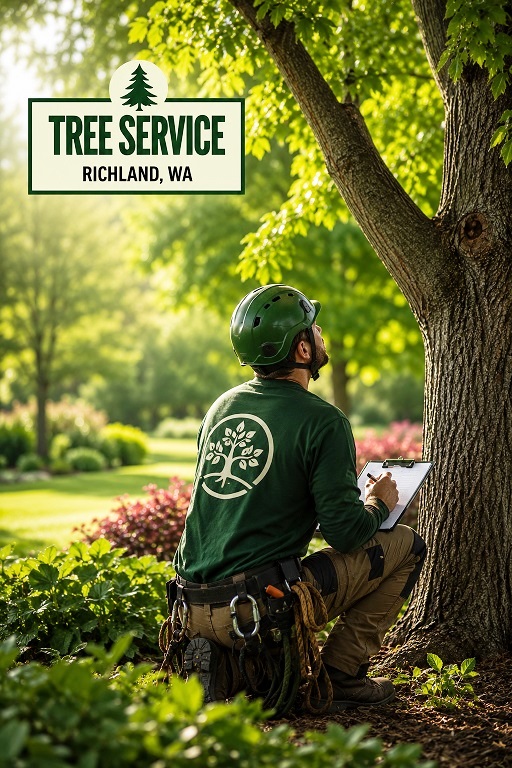

 Professional tree service company providing tree removal, tree trimming, stump grinding, arborist care, and emergency tree services throughout Richland, West Richland, and the Tri-Cities area.