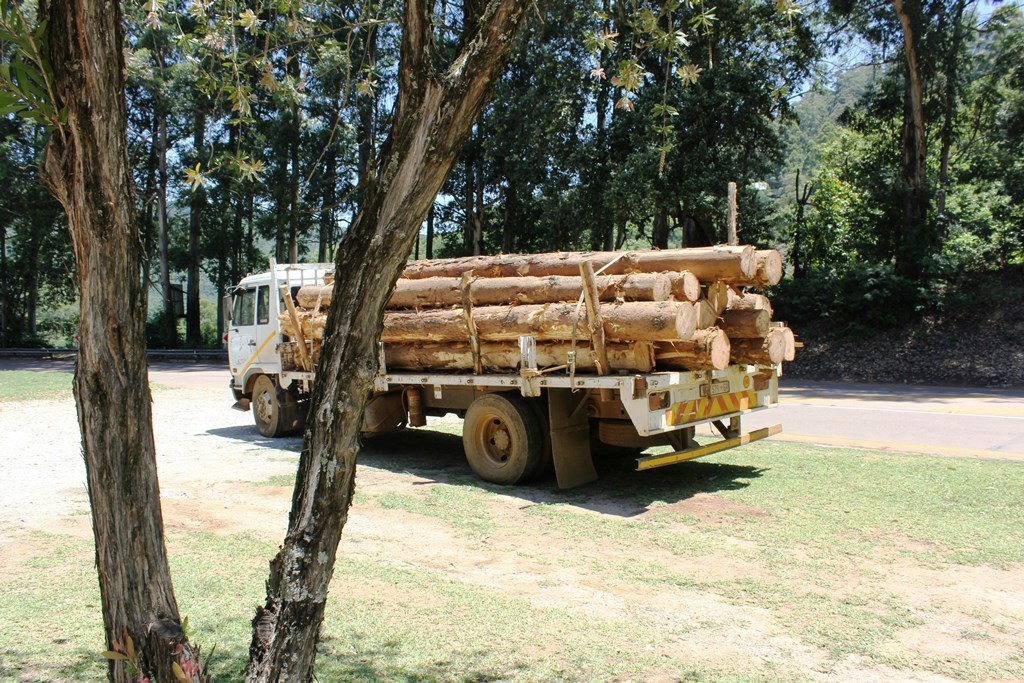
Proper Support Systems Require Careful Planning and Arborist Evaluation
Cabling and bracing systems are highly specialized structural solutions that must be installed correctly to function safely and effectively. Improper placement, incorrect tension, or poor installation methods can actually increase stress on weakened sections rather than reduce it.
Certified arborists evaluate tree stability, branch structure, canopy balance, and long-term growth patterns before recommending support systems. Every tree responds differently based on species, age, weight distribution, and surrounding environmental conditions.
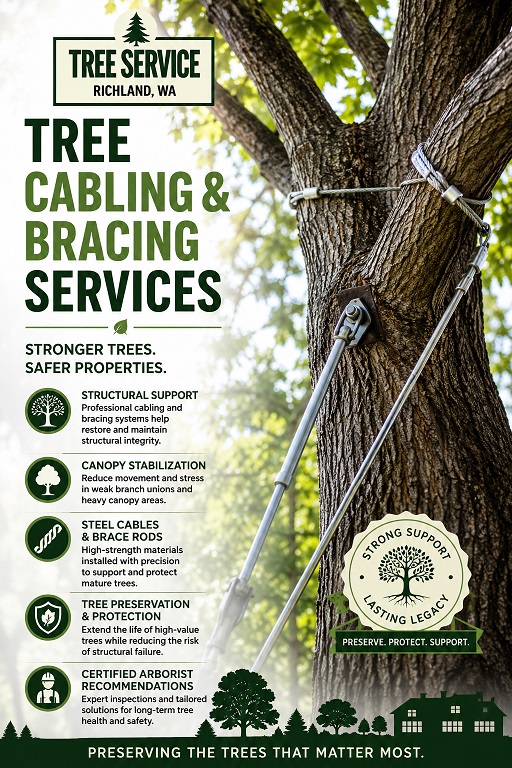
Professional installation helps reinforce structural integrity while allowing trees to continue moving naturally within safe limits. Steel cables and brace rods are carefully positioned to stabilize vulnerable sections without creating unnecessary strain or restricting healthy growth patterns.
Preservation-focused support systems are especially valuable for mature trees that provide significant shade, landscape value, or visual character to the property.
Designed for the Wind and Growing Conditions We See Locally
Trees throughout Richland and the surrounding Columbia Basin experience environmental stress very different from wetter parts of Washington. Strong seasonal winds, dry summers, irrigation dependence, and fluctuating temperatures all affect long-term tree stability and canopy development.
Mature trees throughout older neighborhoods often develop structural stress gradually after decades of uneven growth and repeated wind exposure. Heavy canopies become increasingly vulnerable when combined with drought stress and aging branch attachments.
Spring and early summer are common times for homeowners to schedule inspections before stronger seasonal windstorms arrive later in the year. Addressing weak structural areas early often reduces the likelihood of major branch failures during severe weather.

 Professional tree service company providing tree removal, tree trimming, stump grinding, arborist care, and emergency tree services throughout Richland, West Richland, and the Tri-Cities area.